
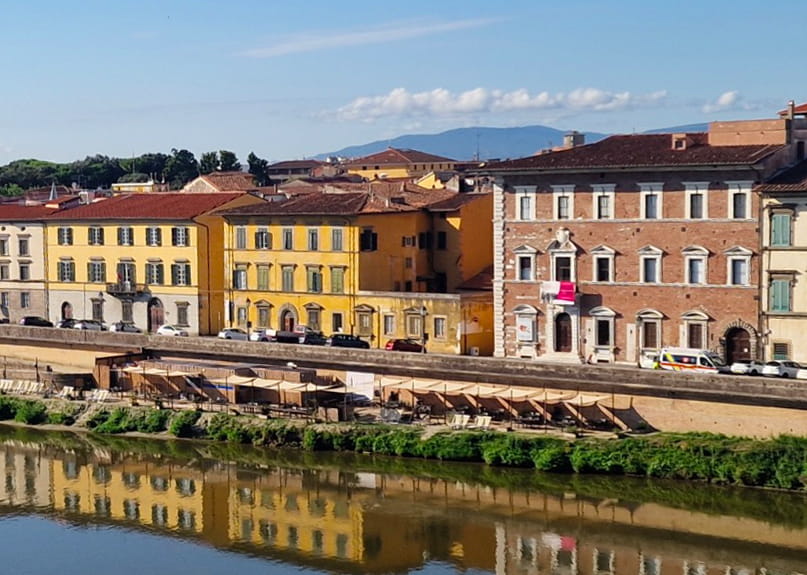
A Historic Property Needs to Be Understood Before It Can Be Judged
A historic property inspection in Tuscany should begin before architecture, charm or restoration potential become the only factors guiding a purchase decision. A historic villa, farmhouse, castle or country estate can make a powerful first impression, but its physical condition and construction history are equally important when assessing the real value of an acquisition.
Architecture, proportions, traditional materials and the surrounding landscape immediately reveal part of the building’s character. Its technical condition, however, tells another story.
A Historic Property Inspection in Tuscany helps buyers understand that story before making important financial commitments. The objective is not simply to identify defects. It is to interpret how the building was constructed, how it has changed over time and what its present condition may mean for the acquisition.
This distinction is particularly important with historic properties. Many have evolved over decades or centuries through extensions, repairs, changes of use and different restoration campaigns. Agricultural buildings may have become residences. Historic villas may contain interventions from several periods. Country houses may combine original structures with later additions built according to different techniques.
Therefore, what buyers see during a property viewing provides only part of the information they need to make an informed decision.
Before choosing a historic property, the building needs to be understood.
Why a Historic Property Inspection in Tuscany Requires Specific Expertise
Historic buildings cannot be assessed in the same way as contemporary construction. Load-bearing masonry, timber structures, vaulted ceilings, lime mortars and traditional roof systems behave differently from reinforced concrete and modern building technologies.
Moreover, every transformation carried out during the building’s history contributes to its present condition. Understanding those transformations requires familiarity with historic architecture, traditional construction techniques and restoration principles.
For this reason, before purchasing a historic building, Dario Balestri recommends having the property inspected by an architect or structural engineer with proven experience in historic construction.
A visible irregularity may be insignificant. Conversely, a detail that appears minor may indicate a condition that deserves further investigation.
The most useful question is therefore not simply: Does this building have defects?
Instead, buyers should ask: What do these signs tell us about the building, and how relevant are they to this particular acquisition?
That change of perspective turns technical inspection into a decision-making tool.
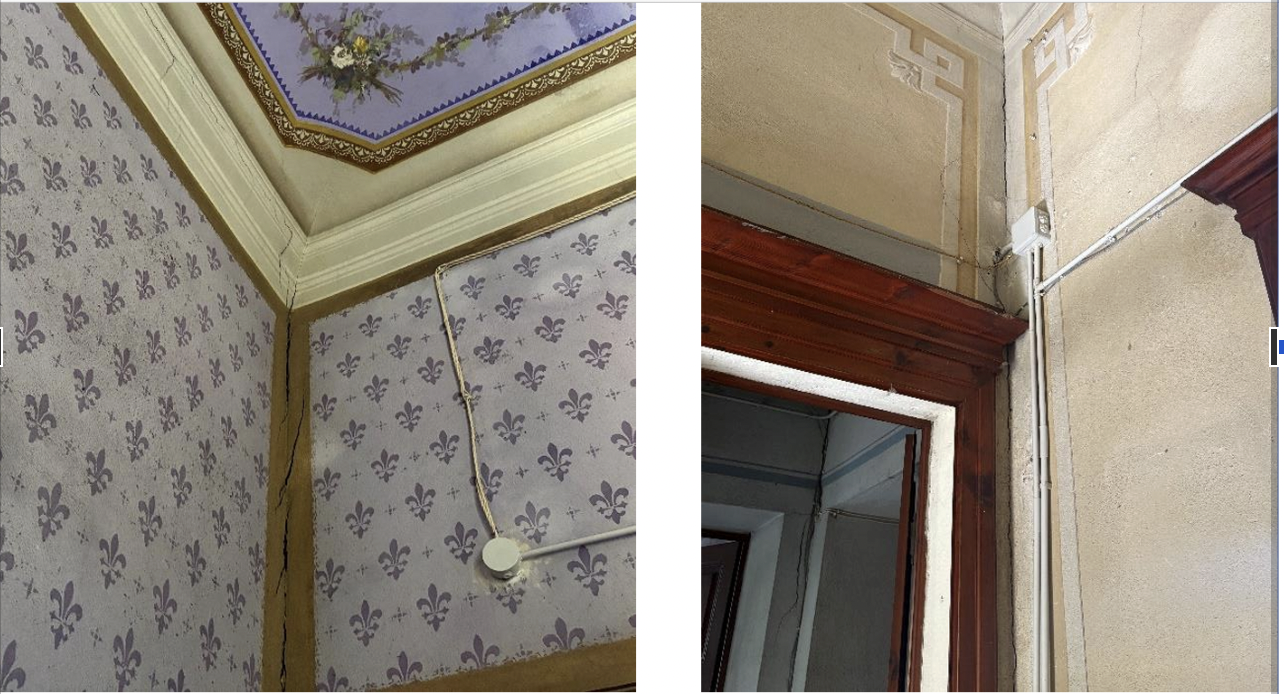
Image Mansory Crack: apparently minor cracks in historic masonry may require professional assessment to establish whether they are superficial, historic and stabilised, or evidence of structural movement
The Most Important Structural Problems Are Not Always the Most Obvious
One of the most common misconceptions is that serious structural problems are always easy to recognise.
In reality, some conditions first appear through relatively subtle signs.
During historic property inspection of a historic building, particular attention may be given to:
- spiral cracks affecting timber beams;
- fine cracks running parallel to load-bearing masonry;
- movement around arches or vaulted structures;
- localised cracking near windows and door openings;
- deformation of timber structural elements;
- irregularities affecting historic roof structures.
I specifically identifies apparently minor conditions such as a spiral crack in a timber beam, a fine linear crack parallel to load-bearing masonry or a vertical displacement at the crown of a brick or stone arch as signs that should not be underestimated.
Nevertheless, their presence does not automatically mean that a property has a serious structural problem.
Historic buildings naturally change throughout their lifetime. Materials age, timber moves and settlements may have occurred many years ago before becoming completely stable.
The important point is not to reach conclusions from appearance alone.
Instead, an experienced professional should interpret each sign within the building’s overall structural behaviour and construction history.
When Visual Inspection Is Not Enough
Consider a fine crack running through a masonry wall. Its appearance alone cannot establish whether it represents superficial deterioration, historic settlement or active structural movement.
The same principle applies to a crack affecting a timber beam or to movement around an arch. Context changes the interpretation.
Is the wall part of the original structure or a later addition? Has the building been modified? Do similar signs appear elsewhere? Is the crack associated with a structural opening? Does its geometry correspond to a recognisable pattern of movement?
Its appearance alone cannot establish whether it represents superficial deterioration, historic settlement or active structural movement.
In other words, technical expertise does not simply identify a problem. It establishes what that problem may mean.
A professional inspection is the starting point, not necessarily the final diagnosis.
If a potentially significant structural condition emerges, the next step may be to involve a structural engineer or another specialist able to investigate its origin and assess the appropriate intervention.
Depending on the issue, the specialist may recommend further diagnostic investigations.
The specialist may use thermographic surveys, material analysis, core sampling or radar-based investigations to obtain additional evidence. These techniques can reveal information that visual inspection alone cannot establish reliably. However, the objective is not to subject every historic building to every possible test.
The investigation should follow the evidence.
First identify the sign. Then understand what needs to be investigated. Finally, determine its relevance to the acquisition.
This targeted approach allows specialist expertise to be used where it creates genuine value.
From Structural Diagnosis to the Cost of Intervention
Identifying a significant structural condition is still only part of the process.
Before proceeding with the acquisition, the buyer also needs to understand what may be required to address it and what that intervention is likely to cost.
My recommendation is particularly clear on this point. When an inspection reveals a significant structural issue, an experienced specialist should assess the possible consolidation strategy and estimate its cost before the buyer completes the purchase. This transforms a technical finding into information that can support an investment decision.
A buyer can then ask: Is the intervention compatible with the overall budget? Does it affect the feasibility of the intended project? Should it be included within a broader restoration programme? Does the cost change the value attributed to the property?
These are acquisition questions, not simply engineering questions.
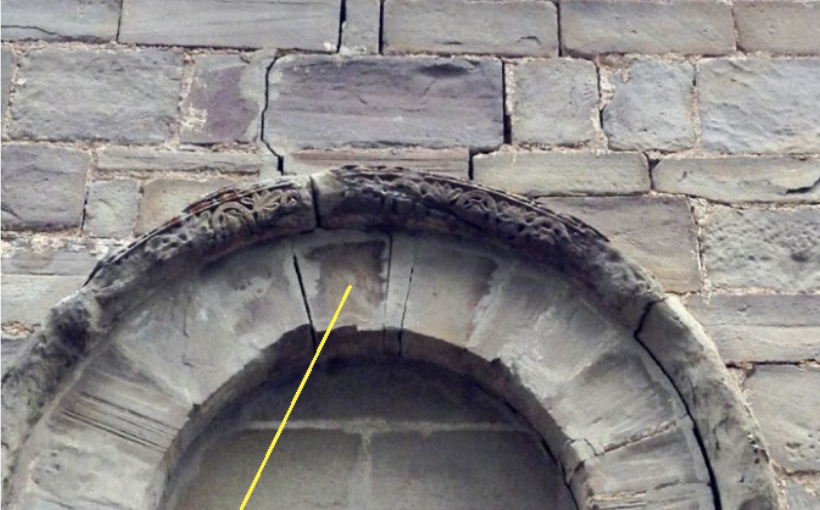
Opening cracks: cracks or deformation affecting arches and structural openings should be interpreted within the overall behaviour of the building before acquisition decisions are made.
How a Historic Property Inspection in Tuscany Supports Better Buying Decisions
he purpose of a historic property inspection in Tuscany is sometimes misunderstood, especially when buyers approach an old building expecting an inspection to produce a simple list of defects.
Instead, professional assessment helps distinguish between:
- ordinary maintenance requirements;
- conditions that should be monitored;
- issues requiring specialist investigation;
- works that should be included within a restoration programme;
- structural conditions that may influence the acquisition itself.
This hierarchy matters. A property requiring routine maintenance presents a very different investment scenario from one requiring significant structural consolidation.
At the same time, a major restoration project may be entirely compatible with one buyer’s objectives while making the same property unsuitable for another.
Technical information becomes valuable when the buyer and the professionals involved relate it to three elements: the building, the project and the buyer’s objectives.
The purpose of the inspection is not to create reasons to reject a property. It is to understand what a technical condition means, determine whether further investigation is required and, when necessary, estimate the cost of intervention before the acquisition. This information can then become part of the buyer’s investment evaluation and negotiation strategy.
Historic Property Inspection in Tuscany and Property Due Diligence
A historic property inspection in Tuscany should not be considered an isolated technical exercise. Structural assessment is one component of a broader Due Diligence process that also examines planning, cadastral, legal and documentary aspects.
It forms part of the broader Property Due Diligence in Italy, where technical, planning, cadastral, legal and documentary investigations contribute to a more complete understanding of the property.
Each analysis answers a different question: structural assessment examines the physical condition of the building; planning investigations help establish whether its current configuration and intended future use are compatible with applicable requirements. Heritage analysis may identify restrictions affecting future interventions. Legal and documentary checks provide additional layers of information.
Together, these investigations allow the buyer to understand not only the property’s present condition but also its limitations and future potential. For an international buyer considering a historic property in Tuscany, this integrated approach is particularly important.
A technically sound building may still be unsuitable for the intended project. Conversely, a property requiring significant restoration may represent an excellent opportunity when the necessary works are understood, feasible and consistent with the investment strategy.
Due Diligence is not simply a collection of reports. It is a map of issues that must be interpreted in relation to the acquisition.
Knowing about a structural issue before entering the decisive phase of a negotiation creates a very different position from discovering it after the purchase.
This is one of the points I emphasises most strongly.
When a relevant structural problem is identified before acquisition, the buyer can commission the necessary specialist assessment, estimate the likely cost of intervention and use that information during the negotiation. Once the transaction has been completed, the same problem becomes an additional cost that can no longer form part of the purchase negotiation.
However, this does not mean that every crack or maintenance requirement should automatically justify a lower offer.
Historic buildings naturally require maintenance and conservation. Therefore, technical findings must be evaluated according to their actual significance.
When an inspection confirms the need for substantial structural intervention, however, reliable cost information may influence:
- the purchase price;
- the conditions of the offer;
- the restoration budget;
- the timing of the project;
- the overall investment strategy;
- or, in some circumstances, the decision to proceed.
The objective is not to use every imperfection as a negotiating argument.
It is to negotiate with knowledge of what is actually being acquired.
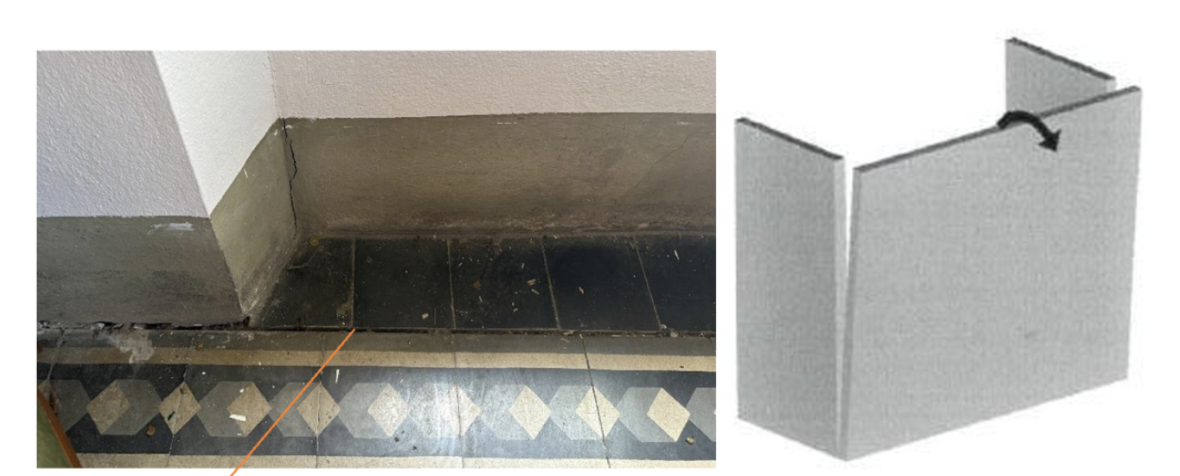
Structural Assessment: structural conditions identified before purchase can be assessed and costed in advance, allowing the buyer to incorporate them into both investment planning and property negotiation.
Technical Knowledge Becomes Part of Investment Planning
The consequences of structural assessment extend beyond the purchase price. For an investor, understanding the building’s condition contributes directly to restoration budgeting, feasibility analysis and long-term asset management.
The same principle applies to a private buyer planning to restore a farmhouse, castle or historic villa.
A property may remain an excellent acquisition even when substantial work is required, provided that those interventions are understood from the beginning and incorporated into the project.
This distinction is fundamental.
A significant condition discovered after acquisition becomes an unexpected cost.
The same condition, when identified, investigated and costed beforehand, becomes information that can be incorporated into the investment strategy.
Technical assessment therefore does more than reduce uncertainty. It allows buyers to plan.
Real Examples: What a Historic Building Can Reveal
Settlement Cracks in Masonry
Small vertical or diagonal cracks in plastered masonry may indicate movement in the underlying structure.
However, their significance depends on whether the movement is historic, stabilised or still active.
That distinction should be understood before restoration costs or consolidation works are considered.
Movement Around Arches and Openings
Cracking near lintels, windows and doors or displacement at the crown of a brick or stone arch can deserve specialist attention.
Yet the visible sign alone does not provide a diagnosis.
Its geometry, location and relationship with the surrounding masonry must first be interpreted.
Roof Deterioration
Historic roof structures require particular attention.
Water infiltration, ageing materials and deferred maintenance can progressively affect timber elements, masonry and interior finishes.
Early identification allows the buyer to include necessary works within the investment plan rather than discovering them as an unexpected post-purchase expense.
Cracks in Timber Beams
Traditional timber beams frequently develop longitudinal or spiral cracks as they age.
The presence of a crack alone should not be interpreted as structural failure.
Its position, depth, geometry and development must instead be assessed by professionals familiar with traditional timber structures.
More Than 35 Years of Architectural Practice Change the Way You Read a Building
For international buyers, a historic property inspection in Tuscany becomes particularly valuable when technical findings are interpreted together with the intended use of the building, the acquisition budget and the wider investment strategy.
After more than thirty-five years of architectural practice, one lesson becomes particularly important: the most consequential conditions are not necessarily the most visually striking ones.
Historic buildings should never be judged solely by appearance.
A careful historic property inspection in Tuscany before purchase can reveal information that influences restoration planning, future costs and negotiation. More importantly, it can distinguish a manageable characteristic of an old building from a condition that deserves deeper investigation.
This is where Dario Balestri’s role as an Architect and Independent Buyer Agent adds a specific perspective to the acquisition process.
The architect reads the building. The Buyer Agent relates that reading to the client’s objectives, investment and negotiation. Together, these perspectives help transform technical evidence into informed acquisition decisions.
Complex historic properties often require several professional competencies. An architect may identify a condition that deserves further investigation. A structural engineer can analyse structural behaviour and assess possible consolidation works. Other specialists may become necessary depending on the nature of the property and the issues identified
The role of the Independent Buyer Agent is not to replace these professionals.
Rather, the value lies in recognising when specialist expertise is required, coordinating the different investigations and interpreting their conclusions within the overall acquisition strategy. For international buyers, this approach also provides continuity throughout a process that may otherwise involve several independent professionals, unfamiliar procedures and technical information in another language.
Final Thoughts. Historic property inspection in Tuscany: Interpret First, Then Choose
Historic properties combine architecture, history, craftsmanship and investment potential. Their value often lies precisely in characteristics that contemporary construction cannot reproduce. Those same characteristics make informed evaluation essential.
A Historic Property Inspection in Tuscany allows buyers to move beyond appearance and understand the physical reality of the building before making important contractual and financial commitments. Some findings will simply become part of future maintenance. Others may influence restoration planning. A smaller number may require specialist investigation, structural consolidation or a reassessment of the investment.
The objective is not to eliminate every uncertainty. Nor is it to transform every imperfection into a problem.
The objective is to interpret first, then choose. For an international buyer or investor, this means understanding the property’s real condition, its potential, its limitations and the investment required to transform it into the project they have in mind.
Continue Exploring the Tuscany Property Guide
Historic property inspection is one component of a broader acquisition strategy. Continue exploring the process through:
- Buying Property in Tuscany: The Complete Guide for International Buyers and Investors
- Property Acquisition in Tuscany: From Property Search to Due Diligence
- Property Due Diligence in Italy: The Complete Guide for International Buyers and Real Estate Investors
- Completing a Property Purchase in Italy: From Negotiation to Closing
Learn how a historic property inspection in Tuscany can identify structural issues, estimate potential costs and support better buying decisions.

