
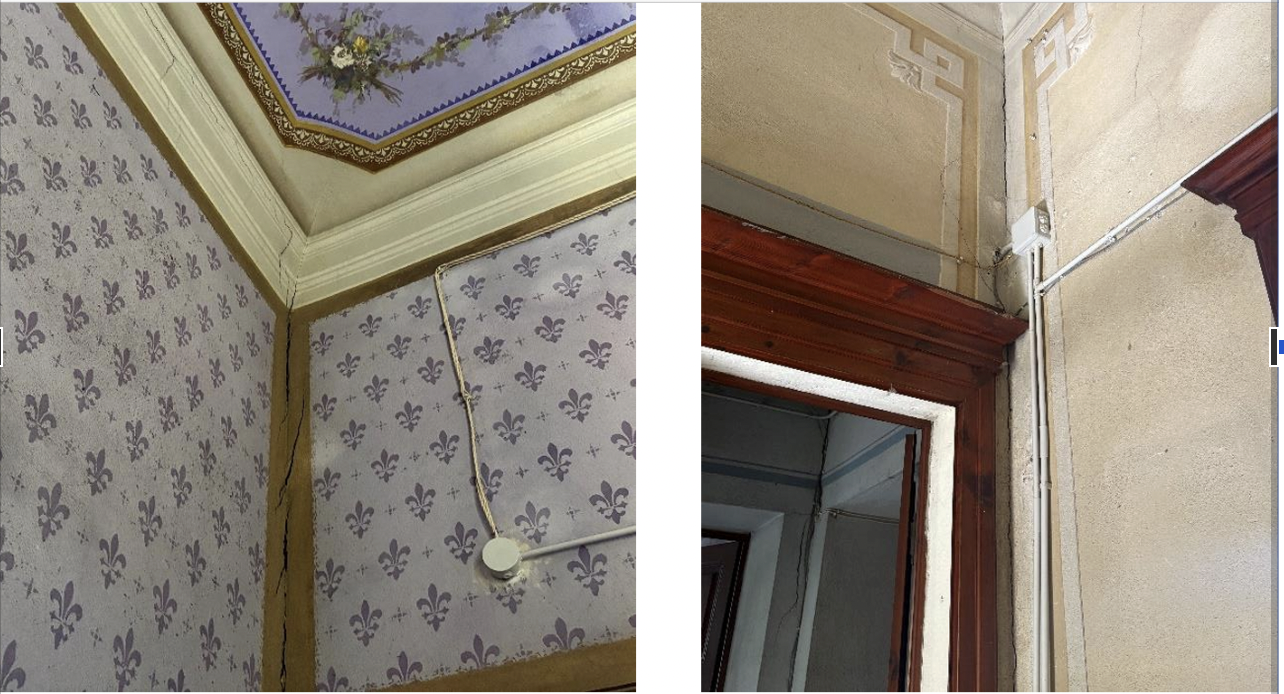
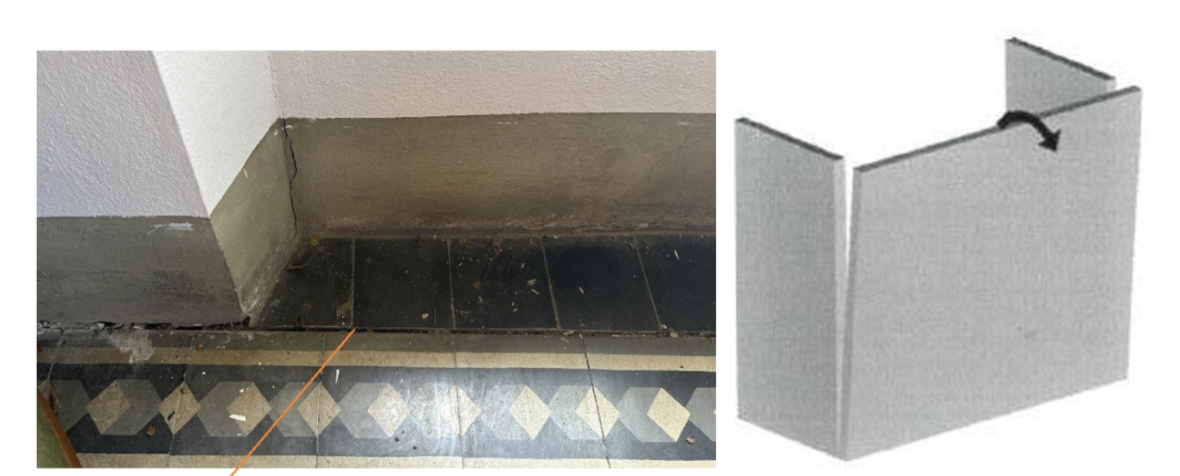
Structural Assessment: structural conditions identified before purchase can be assessed and costed in advance, allowing the buyer to incorporate them into both investment planning and property negotiation.
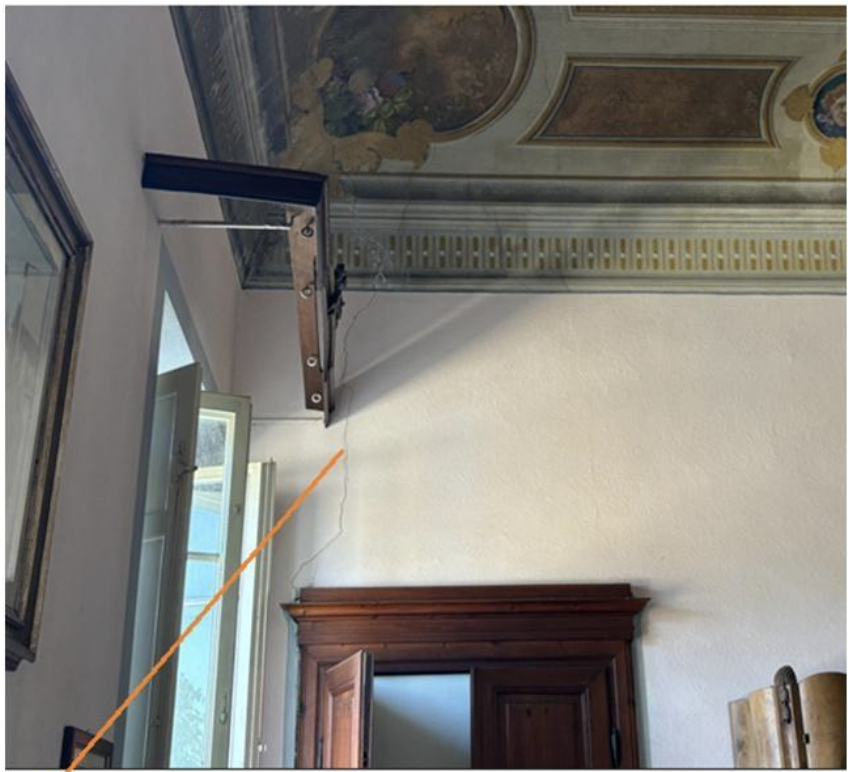
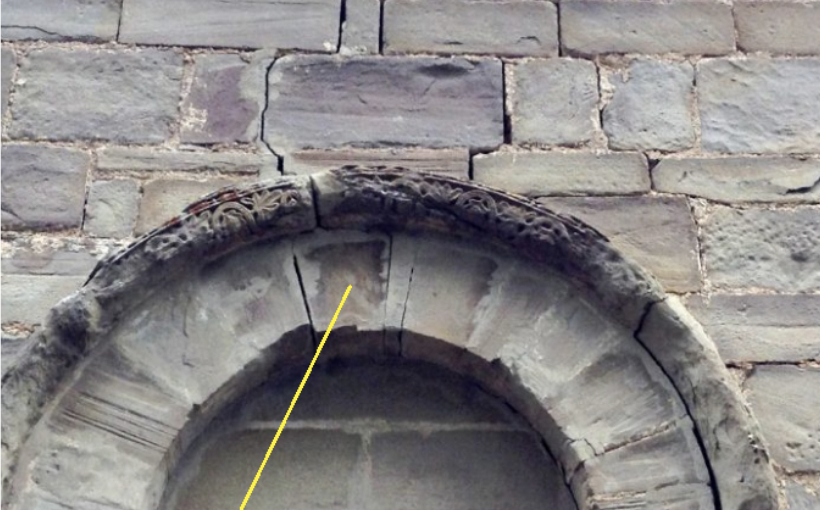
In the image: crack caused by lintel settlement.
Cracks in Timber Beams
Over time, timber beams may develop longitudinal or spiral cracks that should be assessed by an experienced structural engineer.
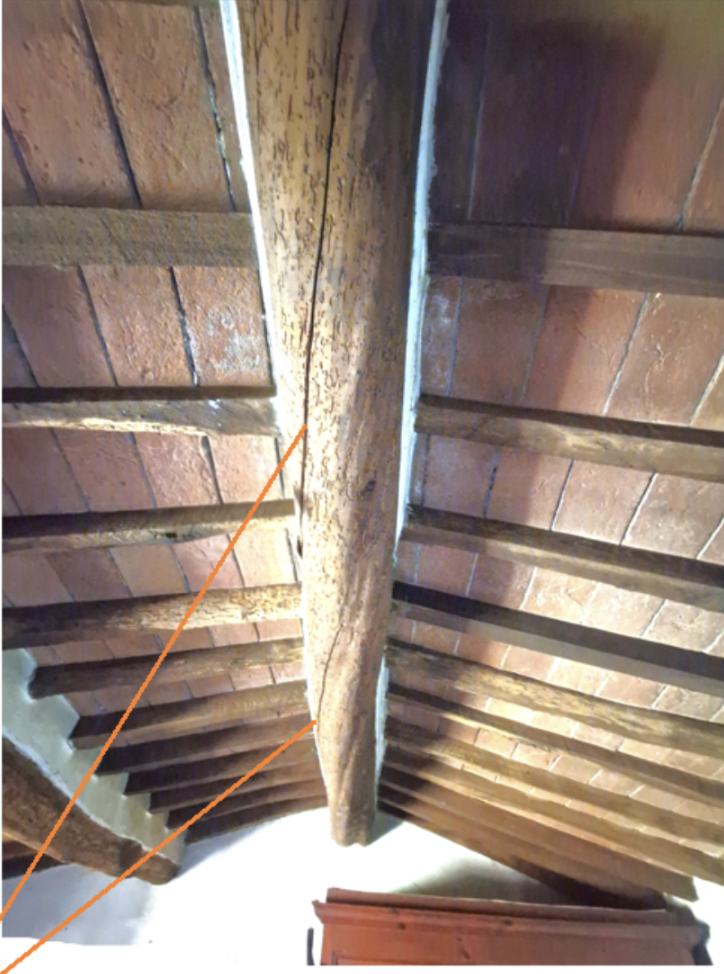
In the image: dangerous spiral crack in a timber beam.
Deterioration of the Roof Covering
If the roof covering of a historic building is damaged, as shown in the image, particular attention should be paid to the underlying timber roof structure, as water infiltration may have caused deterioration.
Identifying these conditions before the purchase allows the buyer to include the necessary work in the future restoration plan, rather than discovering it later as an unexpected cost.
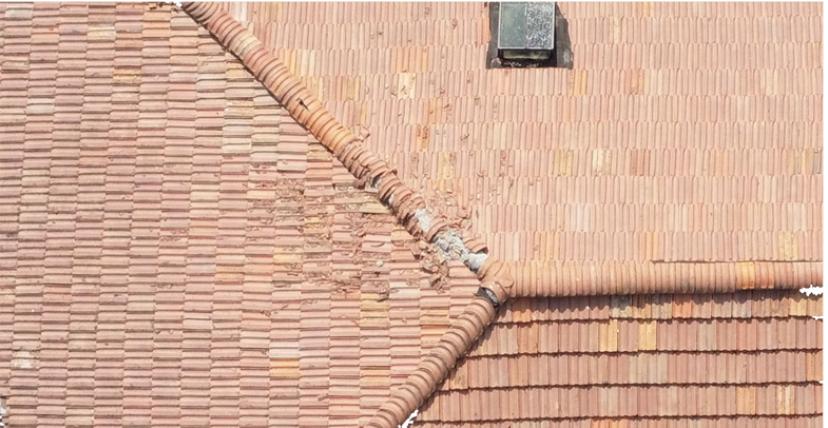
In the image: damaged roof covering captured by a drone camera.
Historic Property Inspection in Tuscany: when a Visual Inspection Is Not Enough
A professional inspection is the starting point, but it does not always provide a definitive diagnosis.
When structural issues such as those described above emerge, it is essential to involve an experienced specialist before proceeding with the purchase. The specialist can assess the problem, develop an appropriate structural reinforcement solution and estimate the cost of the required work.
Understanding the problem before negotiations begin gives the buyer a significant advantage. Once the extent and cost of the necessary work are clear, this information can support the negotiation and potentially justify a substantial adjustment to the asking price.
This is where the Buyer Agent plays a crucial role. A highly qualified professional helps the buyer understand the significance of the findings before a structural issue becomes an unexpected cost or an overlooked factor in the negotiation.
Technical Inspection as Part of Property Due Diligence
When buying a historic property in Tuscany, the structural assessment should not be considered separately from the rest of the acquisition process.
Instead, it should form an essential part of Property Due Diligence, together with the planning, cadastral, legal and documentary checks required according to the characteristics of the property.
Each assessment answers a different question.
The structural assessment helps determine the building’s structural condition and safety. Planning checks establish whether its current condition complies with the relevant regulations and whether proposed alterations are feasible. An analysis of applicable restrictions may reveal important limitations affecting future works. Legal checks can identify voluntary or judicial mortgages and other issues that may affect the acquisition.
Bringing all this information together provides the buyer with a comprehensive understanding of the property and a stronger basis for the final decision.
More Than 35 Years as an Architect Change the Way You Read a Building
More than thirty-five years of professional experience as an architect have led me to a very practical conclusion: historic buildings cannot be judged without an historic Property Inspection in Tuscany.
A thorough inspection before the purchase can reveal conditions that may affect the restoration project, future costs and the negotiation. Above all, professional experience helps distinguish insignificant signs of a building’s age from structural deterioration that deserves further investigation.
This is why a Buyer Agent with an architectural background can bring an additional perspective to the acquisition. The architect reads and assesses the building; the Buyer Agent uses the findings of the Due Diligence process to help the buyer enter negotiations with a clear understanding of the property.
Final Considerations: When Buying a Historic Property in Tuscany, Interpret Before You Choose
Before buying a historic property in Tuscany, a professional inspection allows the buyer to look beyond appearances and understand the physical condition of the building.
Some findings may simply become part of future maintenance. Others may influence the restoration project. A smaller number may require specialist investigation, structural work or a reassessment of the financial implications of the acquisition.
The objective is not to eliminate every uncertainty or turn every imperfection into a problem.
The objective is to interpret first, then choose.
For an international buyer or investor, this means understanding the property’s actual condition, recognising its potential and limitations, and assessing the investment required to transform it into the project they have in mind.
Buying a Historic Property in Tuscany: Knowing the Problem Beforehand Changes the Negotiation
This is where the relationship between technical expertise and the role of the Buyer Agent becomes particularly clear.
Discovering a structural issue before negotiations begin means having the opportunity to investigate, assess and quantify it. Discovering the same problem after closing means dealing with it as a cost that the buyer has already assumed.
The negotiating value of this knowledge can be significant. When a problem is identified before the purchase, the buyer can assess its financial impact and take it into account during negotiations.
This does not mean that every crack should automatically lead to a request for a price reduction.
Historic buildings naturally require maintenance and conservation. The key is to understand the real significance of what the inspection has revealed.
When specialists confirm the need for substantial structural work, the estimated cost can influence the purchase price, the terms of the offer, the restoration budget, the project timeline and the overall investment strategy. In some cases, it may even change the decision to proceed with the acquisition.
Good negotiation is not about using every imperfection to obtain a discount. It is about negotiating with a clear understanding of what you are actually buying.
Continue Exploring the Tuscany Property Buying Guide
The technical assessment of a historic property is one part of a broader acquisition process. You can explore the other stages in these guides:
- Buying Property in Tuscany: The Complete Guide for International Buyers and Investors
- Property Acquisition in Tuscany: From Property Search to Due Diligence
- Property Due Diligence in Italy: The Complete Guide for International Buyers and Real Estate Investors
- Completing a Property Purchase in Italy: From Negotiation to Closing
Learn how a historic property inspection in Tuscany can identify structural issues, estimate potential costs and support better buying decisions.

